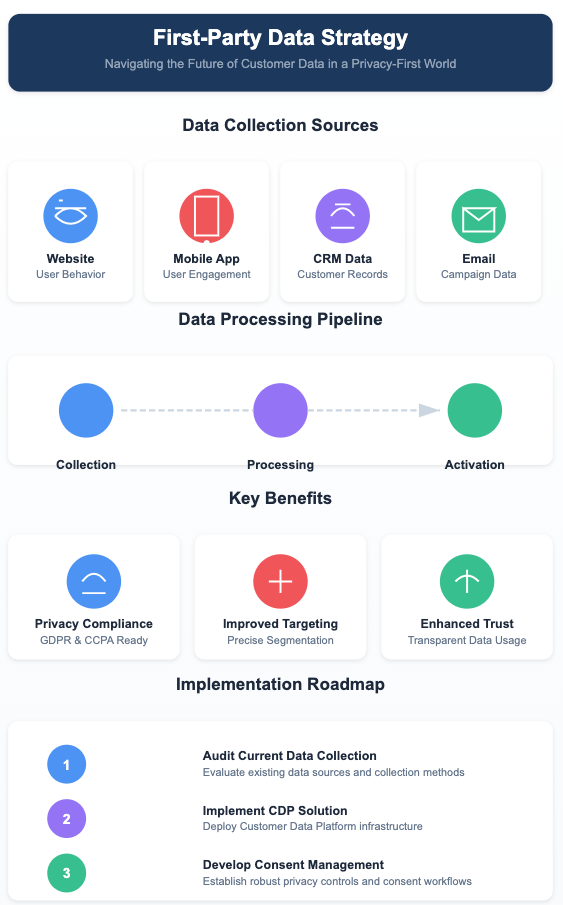
The on-again, off-again deprecation of third-party cookies by Google Chrome, following similar moves by Safari and Firefox, has accelerated this transition. Organizations now face the challenge of building robust first-party data infrastructures while maintaining personalized customer experiences. This requires implementing new technologies and processes for identity resolution—the ability to unify customer interactions across multiple touchpoints into a single, coherent profile.
Companies are adopting various approaches to strengthen their first-party data capabilities. Many are expanding their digital touchpoints through mobile apps, loyalty programs, and interactive content that encourage voluntary data sharing. Others are implementing Customer Data Platforms (CDPs) to centralize and activate customer data across channels. Progressive profiling techniques, which gradually collect customer information through value exchanges, are becoming increasingly popular.
The key to success lies in transparency and value creation. Customers are more willing to share personal information when they understand how their data will be used and receive clear benefits in return. This might include personalized recommendations, exclusive offers, or improved service experiences.
Looking ahead, organizations must focus on building scalable data infrastructure that can adapt to evolving privacy regulations while maintaining customer trust. This includes implementing robust consent management systems, ensuring data quality, and developing sophisticated identity resolution capabilities that work without third-party cookies.
The shift to first-party data represents both a challenge and an opportunity. Companies that successfully navigate this transition will build stronger, more direct relationships with their customers while establishing a sustainable foundation for future marketing and customer experience initiatives.